Developing fine motor control is less about structured pencil practice and much more about functional hand strength gained through everyday play and chores. The kitchen is one of the richest learning environments in any home, offering diverse textures, resistance levels, and coordination challenges built right into meal prep.
Turning Meal Preparation into Motor Practice
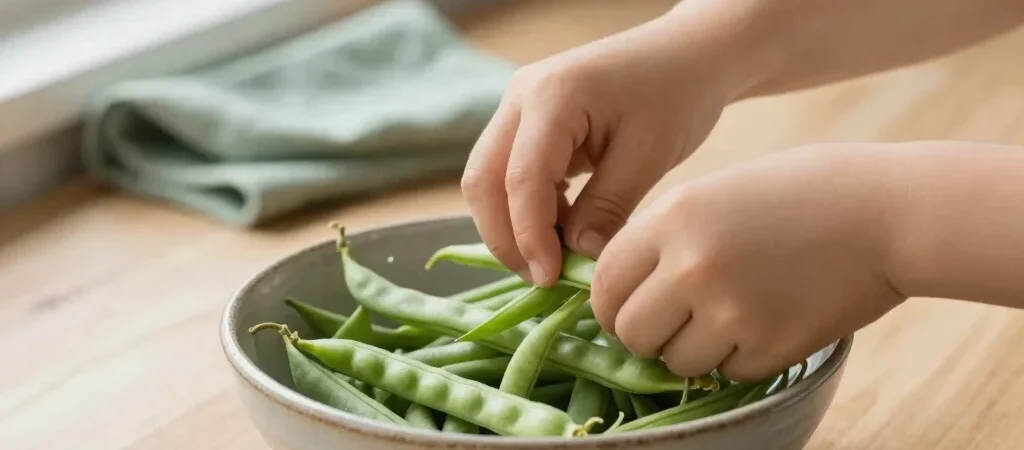
Simple kitchen tasks provide natural opportunities for bilateral coordination, which requires both hands to work together purposefully. Tearing lettuce leaves, peeling bananas, spreading butter with a blunt knife, and snapping green beans all strengthen the intrinsic muscles of the hand while improving thumb-index finger manipulation.
Heavy Work in the Kitchen Environment
Proprioceptive input, often called heavy work, gives feedback to joints and muscles that stabilizes movement control. Carrying a bowl of apples, pushing a heavy wooden spoon through thick oatmeal batter, or squeezing citrus fruits offers resistance that naturally grounds a child's nervous system while building forearm stability.
Integrating Independence into Daily Habits
Rather than setting aside dedicated practice sessions that feel like work, invite your child into existing family routines. Giving a child a meaningful job in the kitchen fosters self-efficacy alongside motor mastery, proving that developmental milestones happen naturally when we open space for authentic participation.